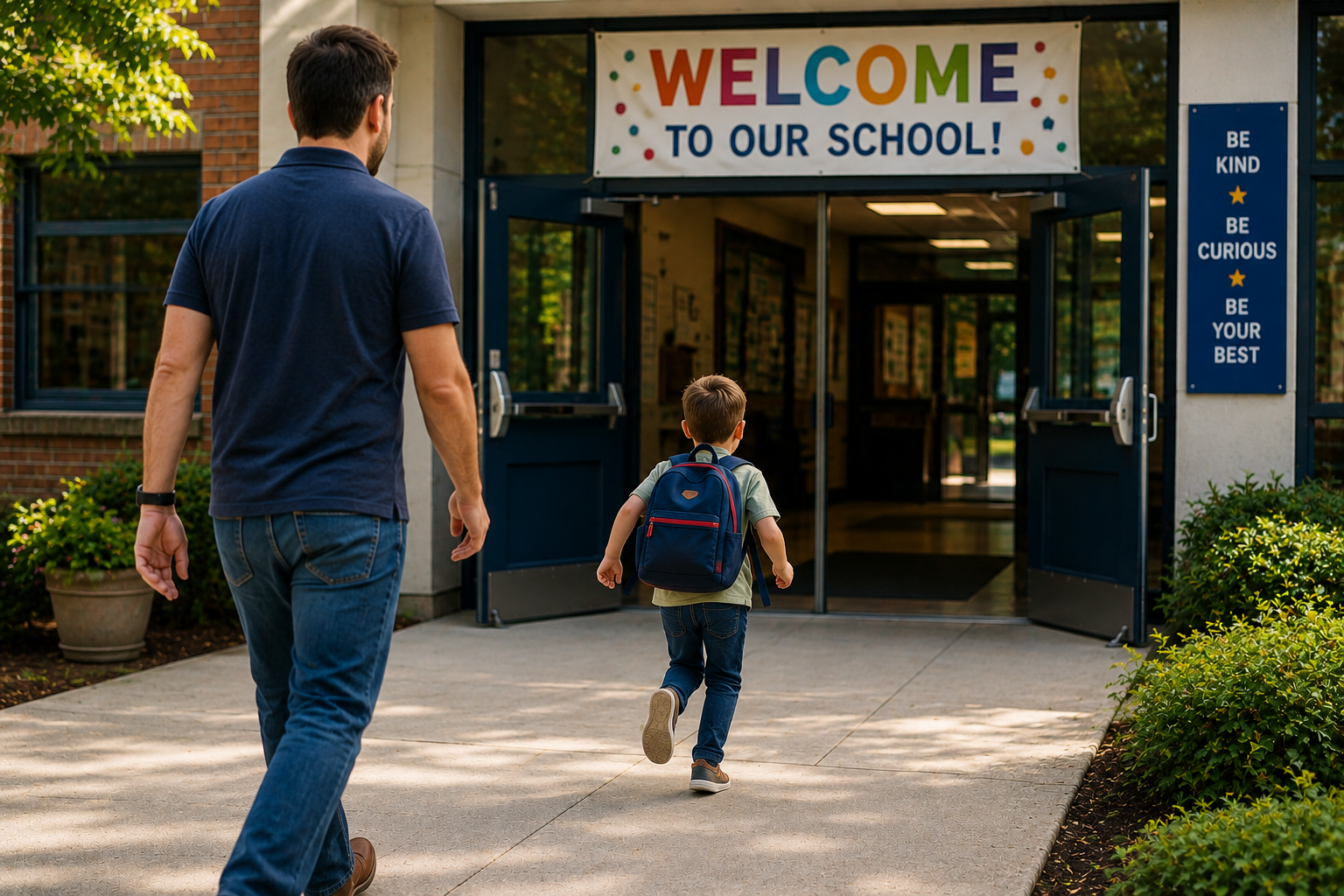
It’s back-to-school season and I’m seeing many online posts of proud parents taking pictures of their child’s first day in a new grade.
And with each new grade comes an anticipation of a new stage of growth—not just academically or biologically, but in emotional maturity too.
I remember the day when my son asked me to stop walking him all the way to his classroom. Not because he was embarrassed. He had just started second grade and wanted to be able to do it by himself.
He turned 21 just over a week ago and having ADHD, school was quite the rollercoaster ride—not just for him but for us as parents!
He often got bored or distracted in class and liked to be the class clown. Sometimes that resulted in getting in trouble with teachers and other times that resulted in difficulties with other students.
We got to know all his teachers really well!
When he was bullied in middle school, I stepped in probably too much wanting to protect him. Rather than empower him, he felt weaker.
Then there’s the time toward the end of his freshman year when he was on his last strike. We had him in the local private Christian school, which had higher behavioral standards than the public school. When COVID hit and they transitioned into online school for the last few weeks of the year, Amy and I breathed a sigh of relief. I remember saying, “Well at least he can’t get expelled now.”
Well, Carter has a way of surprising you! The school was very technological with their assignments. He used his newfound skills to create a video of the “Top 10 Beefs” between people in the school—both students and teachers. Then he emailed it to his entire class. It was supposed to be funny, but that didn’t go down well with the administration.
We then had to scramble to find another school for the last two weeks of the year so he could finish out the grade without it showing as an “incomplete.”
Now, why am I telling these stories? Because as parents, when our kids struggle, it also activates our stress systems.
They forgot their homework? We want to bring it to school.
They’re having struggles with a teacher? We want to help them write an email.
They don’t make the starting line up? We want to call the coach.
They’re having friendship problems? We want to tell them exactly what to say and how to fix it.
They act out in class? We want to ground them.
And obviously, there are times our kids genuinely need us to intervene as well as apply appropriate consequences. But all these experiences are part of the overall lessons for them to learn as kids, and for us to learn as adults, because parenting highlights our areas of growth too.
And this is where attachment is so important.
If we want our kids to be emotionally mature, we must model it for them.
Yet, we can’t give what we don’t ourselves have.
My parenting struggles didn’t primarily come from my kids’ emotional immaturity, they occurred because I needed to grow in my emotional maturity.
The one thing I wish I had done differently is to have more emotional conversations during these experiences. Not only asking about theirs but also appropriately displaying my own.
“More is caught, than taught,” as the saying goes.
So, this school year, when your child comes home stressed about about a grade, a teacher, a friendship, or something that went wrong—and you notice your stress system activating—get curious first.
Don’t just ask, “What happened?” but also “How are you feeling about this?”
Then provide some comfort, empathy, and understanding for what it’s like to have that problem in their age and stage.
Because when we soothe, before we solve, this models for your child how to use the situation to also grow in emotional maturity.
And that’s often the most important lesson the school years can teach.
Resources for Understanding Your Kids & Building Secure Attachment
Parenting is one of the most important things we’ll ever do—and one of the most challenging. Understanding why our kids behave the way they do is an essential skill every healthy parent needs. So much of what we see on the surface—defiance, anxiety, withdrawal, emotional outbursts, people-pleasing, or difficulty communicating—is often connected to deeper emotional needs.
And parenting isn’t just about understanding our kids. It’s also about understanding ourselves.
Do you find yourself reacting to your child in ways you later regret? Maybe one child pushes your buttons more than another. Perhaps you worry about your child’s choices but aren’t sure when to step in, when to set a boundary, or when to let them experience the consequences of their decisions.
You can’t pass on relational skills you were never taught. Many of us entered parenthood determined to do things differently than our own parents, only to discover that our childhood experiences still influence how we respond to our kids.
That’s why we created the How We Love Our Kids Workshop—to give parents practical, attachment-based tools for understanding themselves and their children.
This workshop recording will help you recognize how your own attachment history influences your parenting, understand what may be driving your child’s behavior beneath the surface, and learn practical ways to build stronger emotional connections. You’ll discover how to respond to your kids with greater curiosity and compassion while still providing the boundaries, structure, and guidance they need. We also have a section on sex education for every age.
Because one of the greatest gifts we can give our children is not perfect parenting—it’s helping them develop the security, emotional awareness, and relational skills they’ll carry into adulthood.
If you’re ready to take what you’re learning even further, our Parenting Bundle ($149) gives you a comprehensive collection of How We Love’s best parenting resources—all in one place and at a SIGNIFICANT SAVINGS.
It includes the complete six-hour How We Love Our Kids Workshop, five 90-minute parenting webinar recordings, and two additional audios.
What’s included:
How We Love Our Kids 6-hour Workshop recording
Parenting Your Adult Kids audio download
Teaching Your Children About Sex audio download
Parenting Your Adult Sons and Daughters 90-min webinar
The Avoider Parent and Avoider Child 90-min webinar
The Pleaser Parent and Pleaser Child 90-min webinar
The Vacillator Parent and Vacillator Child 90-min webinar
The Controller/Victim Parent and Child 90-min webinar
With more than 14 hours of content, it’s less than the cost of one hour of therapy!
 Thank You for Growing with Us
Thanks for being part of the How We Love community.
Keep learning, keep loving, and keep growing together.
With love and blessings,
Marc & Amy
Milan & Kay
Join over 100,000 people receiving our weekly relationship Insights directly to their Inbox.
Sign up using the form at the bottom of this page.