
Have you ever seen one of those commercials promising you a whole new body in 60 days? Or amazing results in just two weeks?
Most of us are a little skeptical of those promises.
But what if I told you that your relationship could be just 30 days away from a significant transformation?
Now, I’m not suggesting that 30 days will resolve every problem in your marriage. But 30 days of intentionally practicing a few healthy relationship skills could dramatically change the way you relate to one another.
In couples therapy, I sometimes encounter two people so stuck in a negative cycle that their relationship has become more about defending themselves than showing kindness or tenderness toward one another.
Every conversation becomes a debate. Every disagreement becomes a competition over who’s right and who’s wrong. And somewhere along the way, they’ve forgotten that they’re supposed to be in a partnership.
When I encounter couples like this, I often give them a challenge to agree on four or five simple rules of engagement and commit to practicing them for 30 days. Especially when they’re frustrated or disagreeing.
Here are a few examples.
First, communicate what you would like or want rather than what you don’t like or want. Instead of saying, “I don’t like when you ignore me,” try, “I’d like for us to put our phones down and spend some time connecting.”
Second, take turns doing reflective listening when discussing something important. Reflective listening isn’t simply waiting for your turn to talk; it’s showing your understanding about what was shared. This also requires the speaker to share in bite-sized increments so the listener can reflect.
Third, eliminate absolutes. Words like “always” and “never” tend to invite defensiveness. Most of the time you can just leave these words out of the sentences. You’ll also find less of a temptation to use these words when you’re saying what you want, rather than what you don’t want.
And fourth, use “I feel” statements instead of “You do” statements. Make sure you’re expressing an actual feeling. Saying, “I feel like you don’t care about me” isn’t a feeling. It’s an interpretation of your spouse’s intentions. I feel statements have an actual feeling that follows them which reveals something about your heart, not assuming something about theirs.
Now, here’s the important part of this challenge.
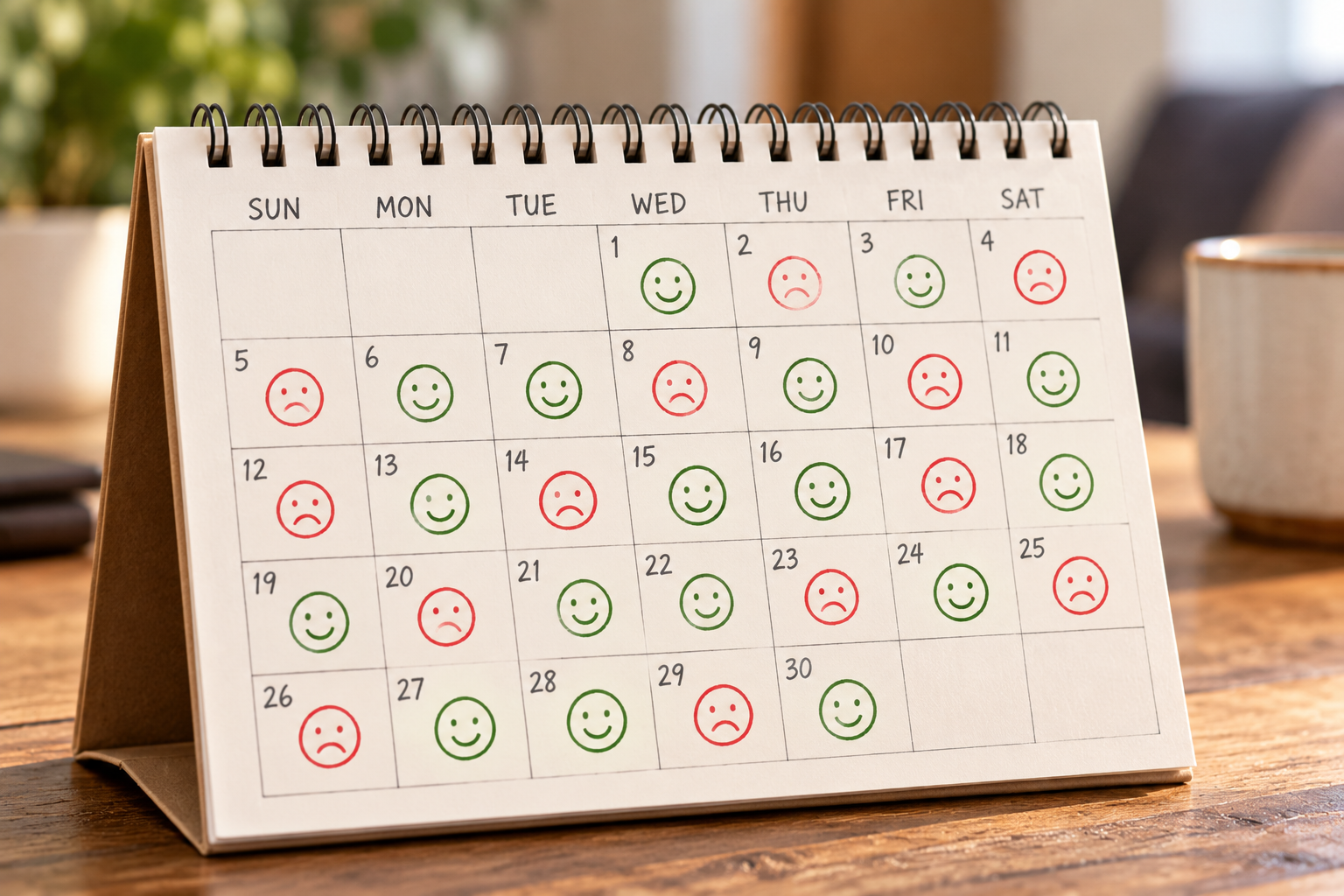
You only count the days you successfully practice the skills.
If you make it four days and then fall back into your old habits on day five, don’t throw your hands up and say, “See, we can’t do it!” I’m factoring in failure. Just pick up where you left off.
You’re working toward 30 successful days of practice, not necessarily 30 consecutive days.
The purpose of this challenge is not to necessarily get couples to agree. The purpose is for couples to develop new relational habits that improve how they treat each other.
Because you can disagree and still be kind. You can feel hurt and still communicate respectfully. You can be frustrated and still manage your reaction.
And often, when couples stop focusing on who’s right and who’s wrong, they finally create enough emotional safety to begin understanding one another.
Why 30 days? Because it’s a manageable number, yet long enough to develop a practice.
It may to a couple 90 days to accumulate 30 successful days. But imagine how differently you might be treating each other by then.
So, here’s my challenge to you. Are you willing to invest 30 successful days practicing healthier relationship skills to see what might change?
You might discover that the biggest obstacle in your relationship isn’t that you just don’t see eye-to-eye on many things. It was the way you treated each other when disagreeing.
And learning to be more tender, might just be the beginning of transforming your relationship.
Rules of Engagement Should Reflect Your Core Pattern
Not every couple gets stuck in the same negative cycle. An Avoider and a Pleaser may struggle with emotional withdrawal and anxiety, while a Vacillator and an Avoider may find themselves caught in a frustrating cycle of pursuing and distancing.
Your 30-day challenge may not look like someone else’s. The more you understand your Core Pattern, the better you can identify the specific habits that need to change.
Here are some examples of Rules of Engagement for the most common Love Style combinations.
Avoider + Pleaser
We will express our feelings, needs, and preferences honestly, rather than minimizing our emotions or avoiding difficult conversations,.
We will stay emotionally present when one of us is upset, without withdrawing, dismissing feelings, or fixing.
We will allow each other to have different opinions, preferences, and emotions, without feeling responsible for changing how the other person feels.
Vacillator + Avoider
We will make requests for connection rather than criticizing or avoiding.
We will communicate when we feel overhwelmed or disconnected, rather than escalating our emotions, shutting down, or withdrawing.
We will listen to understand and validate each other’s feelings, without immediately defending ourselves, correcting the other person’s interpretation, or minimizing their experience.
Pleaser + Vacillator
We will communicate our needs, feelings, and expectations directly, rather than suppressing them or expecting the other person should know.
We will express disappointment honestly and respectfully, without criticism, blame, excessive apologies, or attempts to make the other person feel guilty.
We will take responsibility for regulating our own emotions, rather than expecting the other person to manage our anxiety, frustration, or disappointment.
Our Core Pattern packages combine two Love Styles audios, their corresponding Growth Goals audios and PDFs, plus a Core Pattern audio and PDF designed specifically for your selected combination.
 Thank You for Growing with Us
Thanks for being part of the How We Love community.
Keep learning, keep loving, and keep growing together.
With love and blessings,
Marc & Amy
Milan & Kay
Join over 100,000 people receiving our weekly relationship Insights directly to their Inbox.
Sign up using the form at the bottom of this page.