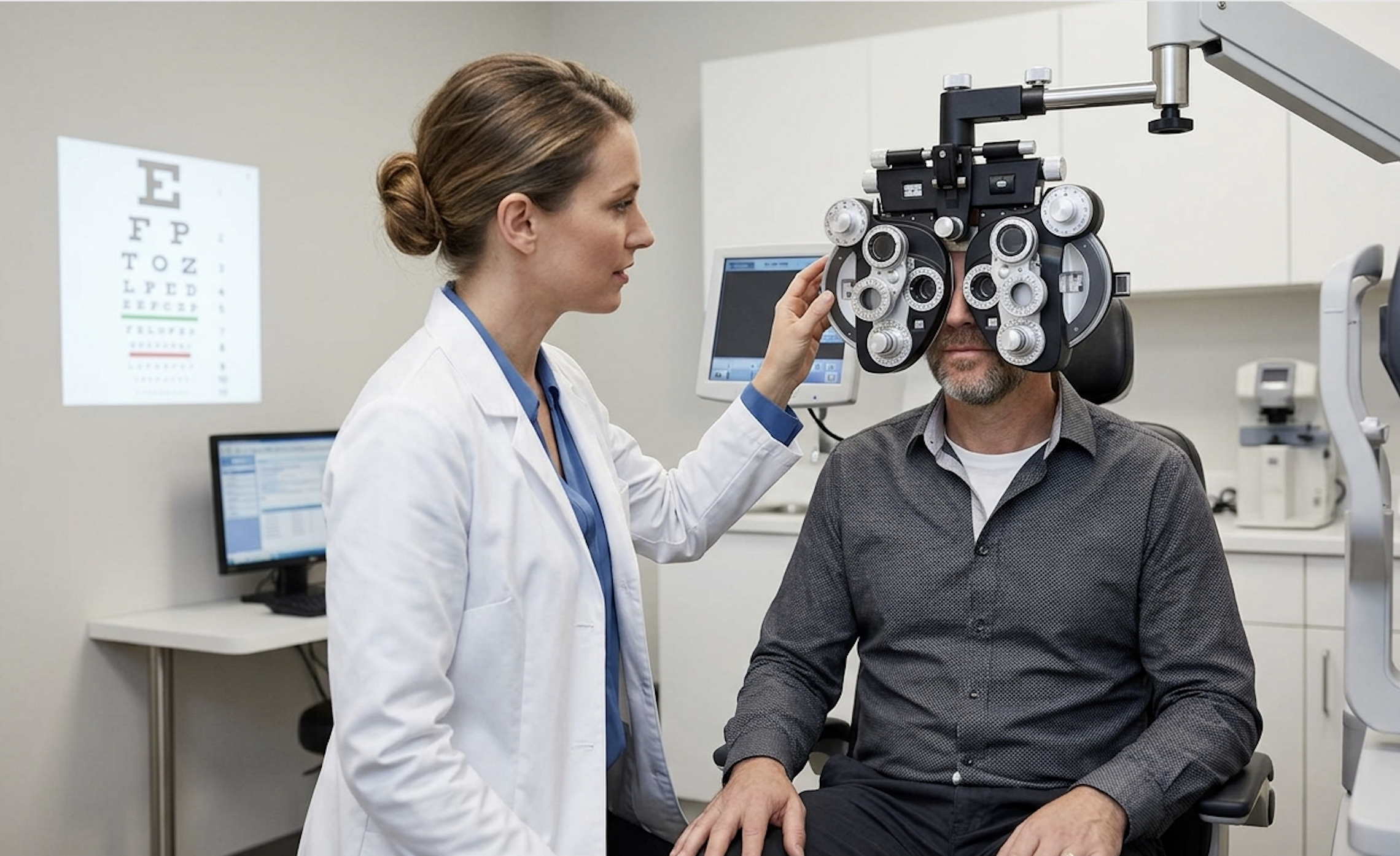
Last week I went for my first eye exam in years. My close vision is still pretty good, but I’ve started noticing that reading small text at a distance is getting harder.
The eye doctor told me that’s completely normal. She said everyone’s eyesight changes with age. The good news was I only had a slight impairment and distance vision usually stops deteriorating in your forties (I’m 46). Then she gave me the bad news: close vision typically starts to get worse around my age and continues through your sixties.
It reminded me of when I turned thirty and people started warning me that my metabolism would slow down. That was hard to imagine back then because I couldn’t put on weight even if I tried. Then around age thirty-three, that began to change.
And there are more milestones ahead that I’m not exactly excited about. In our fifties, we start having joint stiffness and our flexibility begins to decline. In our sixties, energy and endurance decrease, and bone density loss accelerates. In our seventies, we lose muscle strength while reaction time slows. And in our eighties, cognitive processing speed begins to reduce.
Now you may be thinking, “Marc, thanks for all the bad news!”
But all that got me thinking about emotional milestones.
Here’s the hopeful part. While our bodies naturally decline, we can continue growing in emotional maturity for the rest of our lives.
Psychologist Erik Erikson identified a series of developmental milestones for children to grow into emotionally secure adults.
Things like learning trust through having a consistent caregiver, developing autonomy by being encouraged to try new things, and building a healthy identity by learning to be comfortable with who we are.
All this leads to our ability to create meaningful intimacy with others. And our parents’ support is pivotal in determining whether we develop these capacities for adulthood or not.
But what if you didn’t get what you needed growing up?
What if trust was broken? What if your emotions weren’t valued? What if you learned to cope by becoming an Avoider, Pleaser, Vacillator, Controller, or Victim?
The good news is that more than eighty years of attachment research shows that emotional growth doesn’t end in childhood. With intentional effort, we can develop these capacities as adults.
Even if you’re in your forties, fifties, sixties, seventies, or beyond, you can strengthen your emotional maturity, heal old wounds, and build deeper connections to experience greater intimacy.
But it starts with recognizing the emotional milestones you missed. Because without awareness, you can’t have growth.
From there, you can begin learning to trust again, developing healthy boundaries, becoming more emotionally honest, and creating the kind of relationships you’ve always wanted.
And that’s a kind of growth that’s available at any age.

 Watch Milan and Kay talk about repair by learning the Comfort Circle.
 Watch Kay guide a couple through the Comfort Circle step-by-step.
 Download practical tools — the Comfort Circle Guide for the Listener and the Soul Words (our emotions list) — then try a Comfort Circle together today!
 Thank You for Growing with Us