
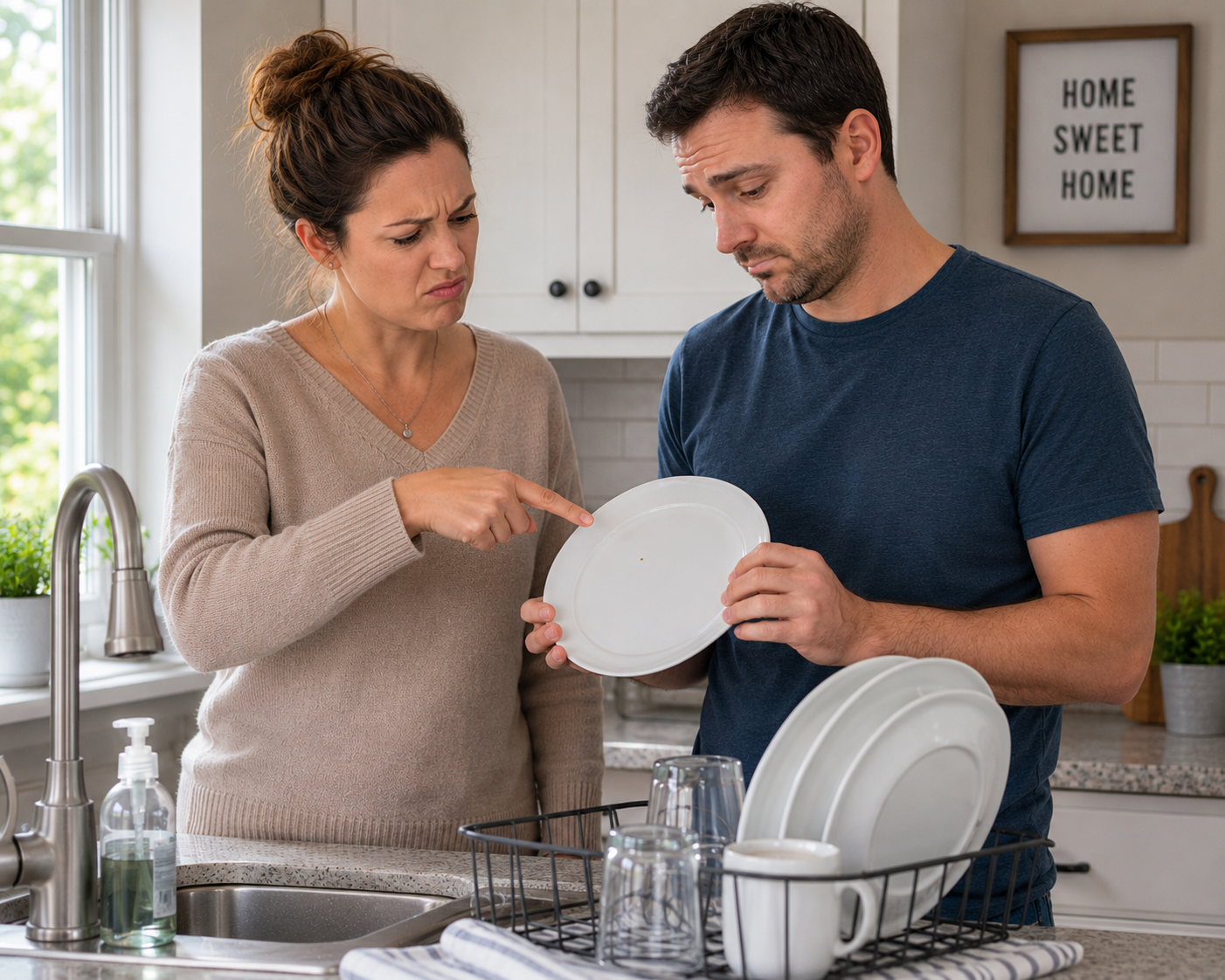
Have you ever noticed that no matter what your spouse does, you seem to find something wrong with it—or vice versa?
Maybe one of you unloads the dishwasher, but instead of appreciating the effort, the other notices the few dishes that weren’t put away correctly. Or one of you plans a date night, but instead of enjoying the time the other focuses on what wasn’t thought about. Perhaps, it’s an apology that’s questioned whether it’s truly sincere.
When this becomes your default way of seeing your spouse, you may be experiencing what relationship researcher Dr. John Gottman calls “Negative Sentiment Override.”
Negative Sentiment Override happens when relational hurt becomes so dominant that it colors almost every interaction. This usually happens due to a lack of true repair. When conflict goes unresolved, the hurt from each incident reinforces the next.
Instead of assuming the best about your spouse, you begin assuming the worst. Even neutral actions are interpreted negatively. Kind gestures are dismissed and even sincere efforts at repair can be overlooked.
Every couple who is stuck has a conflict core pattern—meaning every conflict plays out in a predictable cycle.
Avoiders dismiss or flee.
Pleasers and Victims freeze or appease.
Vacillators and Controllers pursue or fight.
When you put any two of these combinations together, that’s how you get your core pattern.
Rather than recognizing it’s the pattern that’s damaging the relationship, partners often believe their spouse is the problem.
The turning point in a couple’s relationship comes when couples stop blaming each other and begin seeing the cycle as the real problem.
Instead of blaming each other or saying something critical, try saying:
“We are caught in our Core Pattern again. This is stealing our time from connecting with one another.”
That simple shift changes everything. Now you’re standing side by side, fighting the pattern instead of fighting each other.
Dr. Gottman’s research also found something remarkable. Healthy, thriving couples maintain about a 5:1 ratio of positive to negative interactions—even during conflict.
In other words, every criticism, complaint, or negative moment is outweighed by multiple expressions of kindness, appreciation, affection, humor, curiosity, or simple emotional presence.
That means, if you make at least one negative comment a day to your partner (which many people do), you need to balance that with 35 positive comments each week!
This reminds me of God’s heart toward us.
Romans 2:4 tells us that it’s the kindness of God that’s intended to lead us to repentance.
Yet in marriage, we take the opposite approach. We think that if we become more critical, more forceful, or harsher in expressing our hurt, our spouse will finally change.
But criticism rarely produces transformation. More often, it produces defensiveness, shame, or withdrawal.
Kindness is not overlooking, ignoring, or appeasing. It’s inviting a person to address an issue by offering emotional safety. When people feel safe rather than judged, they’re far more likely to listen, take responsibility, and grow.
One simple practice I often prescribe couples to help break Negative Sentiment Override is praying together every evening.
This could simply be:
“Lord, help us see each other through Your eyes. Give me grace where I’ve become critical. Help me recognize my own areas of growth before I focus on my spouse’s shortcomings. Teach us to fight for our relationship instead of against each other.”
When you pray together, you remember that you’re on the same team. Even when you disagree, you can still be united in asking God to soften your hearts and strengthen your relationship.
And set an alarm—that will ensure you won’t forget. Mine and Amy’s is 930pm!
Do You Know Your Core Pattern and How to Exit It?
This week, pay attention to the story you’re telling yourself about your spouse.
When you notice yourself assuming the worst, pause and ask:
Is this my spouse—or is this our Core Pattern?
What positive effort might I be overlooking?
How can I add one more encouraging interaction today?
Remember, secure couples aren’t couples who never struggle. They’re couples who learn to recognize their Core Pattern quickly, extend grace generously, and intentionally build more positive moments than negative ones.
When you stop seeing your spouse as the enemy and start seeing your Core Pattern as the barrier to intimacy, hope begins to grow.
There’s no shortcut for hard work when it comes to growth, but understanding why problems exist is key to getting the right strategy.
This could be the most impactful $19.99 you ever spend!
 Thank You for Growing with Us
Thanks for being part of the How We Love community.
Keep learning, keep loving, and keep growing together.
With love and blessings,
Marc & Amy
Milan & Kay
Join over 100,000 people receiving our weekly relationship Insights directly to their Inbox.
Sign up using the form at the bottom of this page.