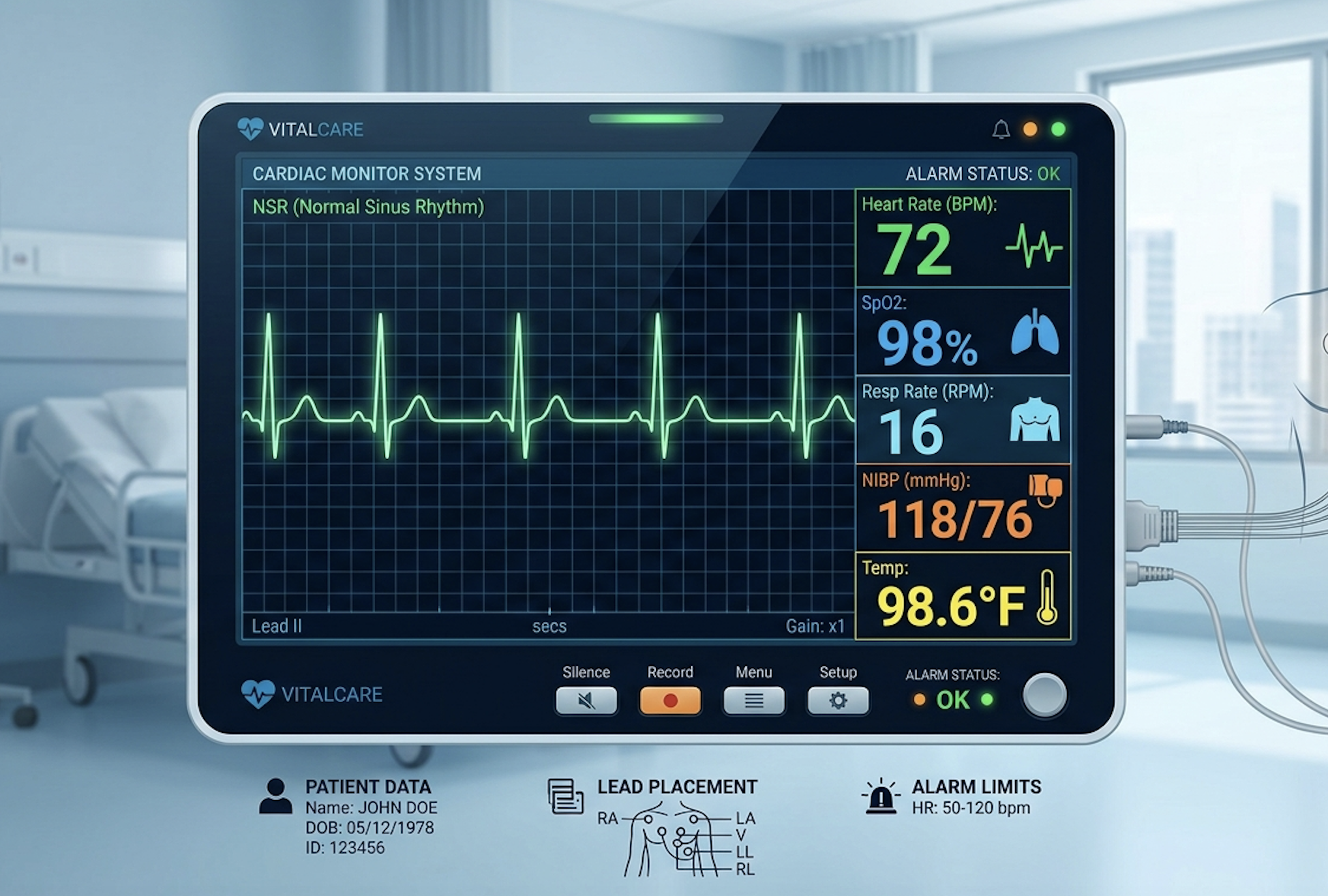
As a nurse, I (Amy) was first trained to recognize what normal heart rhythms look like so I could identify a dangerous arrhythmia. Because before you can recognize when something is off, you need to know what healthy looks like.
In a similar way, we can learn to recognize our relational rhythms.
We all develop patterns of communicating, connecting, and protecting ourselves that are shaped by our childhood experiences. But for many of us, instead of learning healthy relational rhythms, we’ve become familiar with abnormal ones—and this has subtly shaped how we view relationships and our reactions today.
Understanding our reactivity is the first step toward managing it, because we want to guide our triggers, not let our triggers lead us.
You might be surprised to hear that during my years as an ICU nurse, some of my Vacillator traits were actually helpful.
Vacillators don’t like to wait because, in childhood, they often waited on connection—feeling unseen, unheard, and misunderstood. In the ICU, that urgency to be seen and heard stat was an advantage.
When a patient needed something, I could page the physician to call me ASAP, communicate my concerns, and advocate strongly. ICU teams also rely on closed-loop communication—confirming messages so everyone knows they’ve been understood.
In the ICU, being heard needs to happen quickly, but those same traits disrupt communication when I get home. When things don’t happen “stat,” my underlying Vacillator imprint can get easily triggered. What feels like strong advocacy in the hospital environment, shows up as impatience in my family setting.
That’s when the attachment rhythm is most clearly seen as irregular.
Reading EKG rhythms takes study and practice. Over time, interpreting them becomes quicker and more intuitive.
As a recovering Vacillator, I’ve discovered that the same tendency to replay conversations and ruminate on situations can actually help me grow—when I change my focus. Rather than replaying arguments through the lens of my hurt, if I can slow down and ask myself where that hurt originated from, I can learn to identify my triggers.
Marc often says, there’s a reason we call the emergency services First Responders and not First Reactors!
Yet how many of us default to being a first reactor when stress ramps up?
One of the most important steps in becoming a First Responder in your relationships is studying your growth goals—just like I studied EKG rhythms. As you become more aware of the emotional wounds that shaped your attachment style, you can begin to recognize your patterns sooner and choose a different response.
Then you can learn to guide the relational rhythms that you desire, instead of being swept along by the rhythms that have always driven you.
And that can create the space for the connection you’ve been longing for all along.
 Thank You for Growing with Us
Thanks for being part of the How We Love community.
Keep learning, keep loving, and keep growing together.
With love and blessings,
Marc & Amy
Milan & Kay
Join over 100,000 people receiving our weekly relationship Insights directly to their Inbox.
Sign up using the form at the bottom of this page.