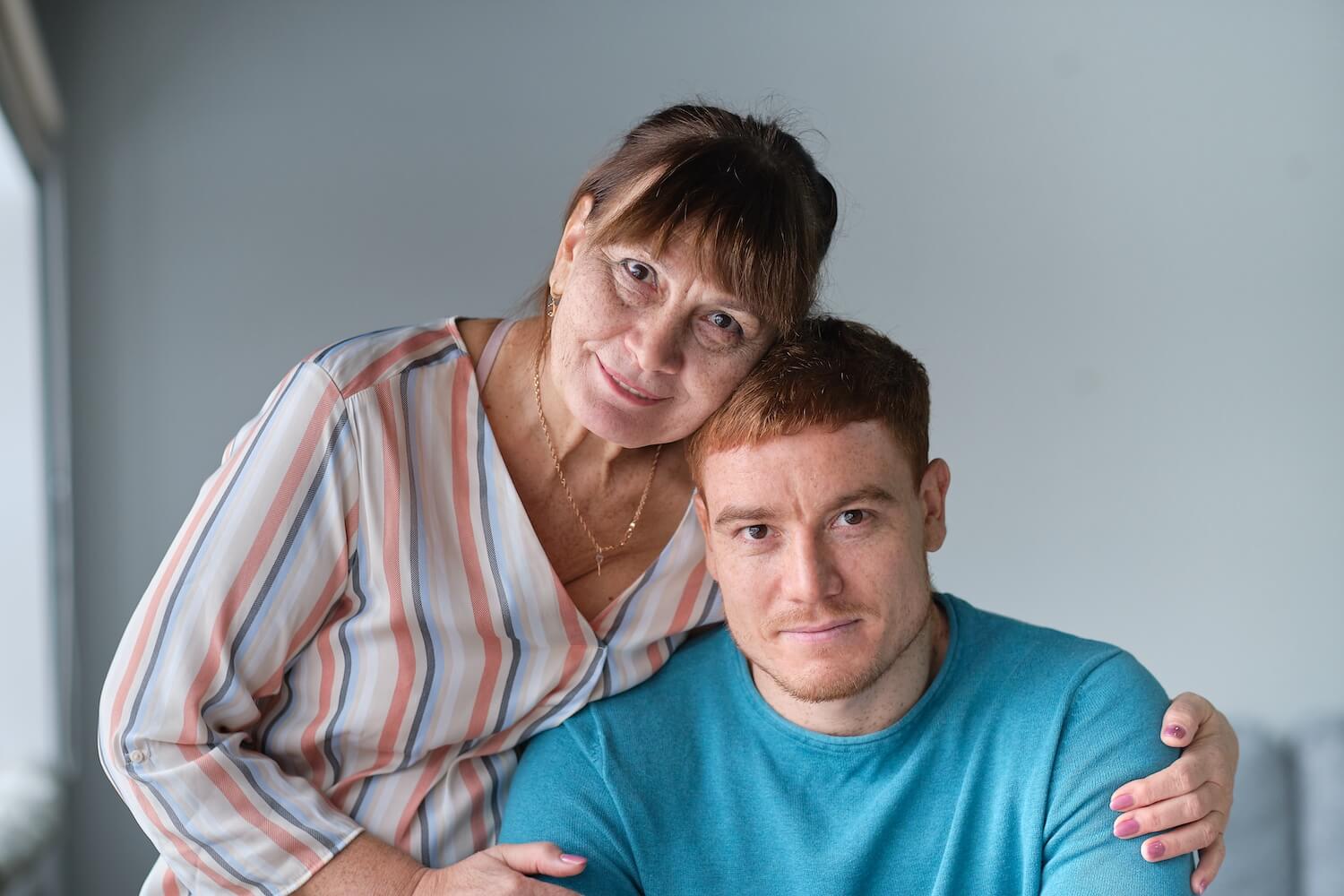
Last week, I wrote about learning how to be an adult when we go home for the holidays. This week, I want to face what it looks like to let go of the parenting role.
We all know the word adulthood, but have you heard the term selfhood?
Selfhood is awareness and autonomy to be distinct from others while remaining connected. It’s meant to develop progressively throughout childhood through a process called individuation—learning to think, feel, and act separately from our family. Healthy parents support this by not only applying appropriate limits and boundaries, but also by offering increasing freedom.
Here’s an example of how this process typically unfolds:
- A mother allows her toddler to explore safely out of her sight for a few moments
- When he’s a little older, he’s away from mom for the whole day at school
- As he grows, he sleeps over at a friend’s house for a night
- In his early teens, he goes to summer camp for a week
- Then once he graduates, he’s away at college for semesters at a time
If this process goes well, eventually, he launches and full selfhood is achieved!
But for many people, adulthood arrives without selfhood. Not necessarily because of overt control from an angry parent—though that does happen—but often because parents limit exploration due to their own fears. Fear their son or daughter will make mistakes, or that they’ll get hurt, or that things won’t turn out okay.
The problem is this: fear and love often oppose one another in decision-making. Fear tends to produce control. But love can consider our fears and still create room for freedom—like God does with freewill.
Scripture gives us an interesting picture of Jesus’ maturity into selfhood. We’re told very little about His childhood, but Luke’s Gospel describes a moment when Jesus goes missing during Passover when the family visits Jerusalem. For three days, His parents can’t find Him—mirroring what was later to come in another visit to Jerusalem during Passover and the three days between the cross and the resurrection.
In Jewish culture, a boy becomes a man at thirteen. Jesus was twelve, but he wasn’t lost—He intentionally separated. It was a clear act of individuation signaling he was moving out of childhood.
Later, at His first miracle, when His mother asks Him to intervene at a wedding, Jesus addresses her as “woman.” That wasn’t disrespect—it was another signal. That He was no longer under her authority.
And finally, from the cross, Jesus says to Mary, “Woman, behold your son,” and to John, “Behold your mother.” He wasn’t meaning that John was now to be parented by Mary. Rather, He was passing His responsibility to care for His mother as she aged to John.
In our culture, adulthood is legally recognized in the late teenage years. Even if young adults are still financially and somewhat emotionally dependent on their parents, they are meant to be transitioning into full adulthood. But when parents resist that transition, it can create long-term relational problems.
Adults whose individuation was limited often develop an anxious attachment style and can default to pleasing others causing imbalance in relationships—especially in marriage.
And when a parent continues to seek control—particularly a mother—it can create deep tension between the spouse and the parent when loyalties collide.
Here’s the mindset shift that must happen:
When your child grows up, they don’t become an adult child—They become an adult son or adult daughter.
No longer under your authority, but now a peer with you, who will one day raise their own children to separate and individuate to be released in the same way.
Letting go as a parent doesn’t mean losing your son or daughter.
It means fulfilling the mission by loving them well enough to let them become who God designed them to be. That’s the true calling of parenting.
🙌 Thank You for Growing with Us
Thanks for being part of the How We Love community.
Keep learning, keep loving, and keep growing together.
With love and blessings,
Marc & Amy
Milan & Kay