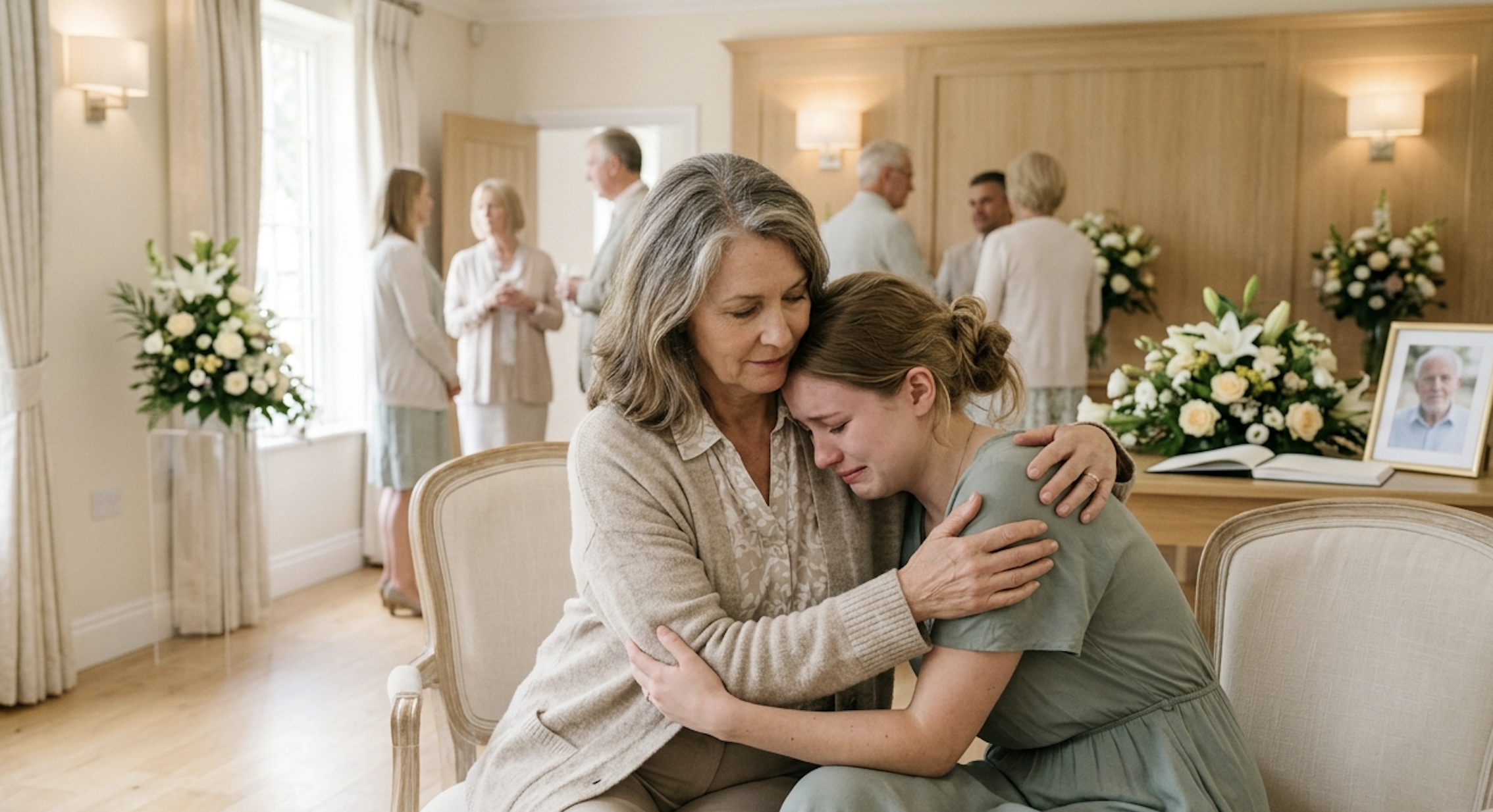
I have a very good friend whose mother is in her final days, battling terminal cancer. Many of you have known this pain or walked alongside someone who has.
But grief doesn’t only happen with death.
- We experience grief anytime there’s a loss, including:
- Loss of safety or stability
- Loss of health
- Loss of a relationship
- Loss of trust
- Loss of identity (role or status)
- Loss of a dream
Grief is real and powerful and often confusing. But it also follows predictable stages and understanding them can help you make sense of what you’re feeling.
Before we reach acceptance, we typically move through some version of
Denial ⇒ Bargaining ⇒ Anger ⇒ Sadness ⇒ Acceptance
Most people expect sadness—and maybe anger.
But denial and bargaining are often harder to recognize.
Denial classically looks like not addressing the problem, pretending it’s not as bad as it is, or expecting to move on quickly. Yet, sometimes, it’s getting obsessively focused on gathering facts or details around events leading up to the loss to try and make sense of it.
We often think of bargaining as hoping for a quick fix or reversal of what has happened, but it also looks like getting stuck on the “what ifs” or “should’ve haves”—which can stir up guilt.
Even Jesus experienced a bargaining stage in the garden of Gethsemane—asking if the cup of suffering could be taken away from Him.
What We Really Need in Grief
In that moment of emotional and mental suffering, what even the Savior of the World needed most wasn’t a solution—it was presence.
He asked his closest friends to stay awake and help support Him. And when they couldn’t, an angel came to strengthen Him.
I remember when I went through the loss of my marriage almost 20 years ago.
I had two best friends from college—both living a few states away. Naturally, I turned to them, wanting to talk about the pain I was going through.
One pulled away and stopped answering my calls. Later, I learned it was because he didn’t know what to say. He’s not a bad friend—but being more emotionally-avoidant, he just didn’t know how to sit with me in my pain.
But my other friend flew out to be with me.
He sat with me. Talked with me. Listened to my pain.
I didn’t expect either of my friends to fix things—because I knew they couldn’t. What I wanted most was their presence—someone willing to be with me in the middle of the heartache, and to listen with empathy as I processed it.
Why Grief Matters
While we may wish we didn’t have to go through grief, it is part of God’s design.
Grief tells us we cared deeply and that’s why there’s a feeling of loss.
You can’t skip grief.
But you can get stuck in each of the stages if you resist them.
Some people deny and bargain by running back to a toxic relationship, or overlooking indiscretions, only to end up in the same painful place.
Other’s get stuck in anger or sadness—unable to move forward.
While grief has no exact timeline, it’s not meant to be permanent.
Moving toward acceptance requires engaging—not avoiding—our emotions.
If You’re Grieving—or Walking with Someone Who Is
If someone in your life is going through loss, they probably don’t need you to try and fix it or make them feel better. They need you to walk with them through it.
Often, our urge to fix comes from our discomfort with our own difficult emotions. But you can’t connect with someone’s pain while at the same time trying to make it disappear.
If you’re going through grief, pay attention to what stage you may be in and name it. When you can identify the stage, you’re less likely to get stuck in it.
And don’t go through it alone.
With the right emotional support and comfort, while the pain may not fully go away, healing will come—and often sooner that it would otherwise.
Need Help Giving Comfort?
Each of the insecure attachment styles can struggle in their own way to offer true comfort.
Avoiders and Pleasers want to move others quickly past their pain. Avoiders find emotions messy, so they try to bypass them. While Pleasers feel anxious seeing others in distress and can spin to the positive as a way to reduce their own anxiety.
Controllers and Victims often have difficulty being gentle with their own pain, so it can be hard for them to sit with and respond compassionately to the pain of others.
While Vacillators can be inconsistent with offering care, depending upon their mood. When other’s emotional states fluctuate with the grief stages, they can take it personally.
The good news is that these patterns can change.
With practical tools, you can learn to stay present, engaged, and supportive in difficult conversations.
Two helpful resources:
• The Comfort Circle Guide for the Listener — to help you remain present instead of fixing or withdrawing
• Soul Words (our emotions list) — to build emotional awareness and language
 Thank You for Growing with Us
Thanks for being part of the How We Love community.
Keep learning, keep loving, and keep growing together.
With love and blessings,
Marc & Amy
Milan & Kay