Milan and Kay transformed their relationship after they learned about childhood attachment styles and realized the ways they learned to connect with their parents back then were still influencing their behaviors, reactions, and expectations in adulthood.
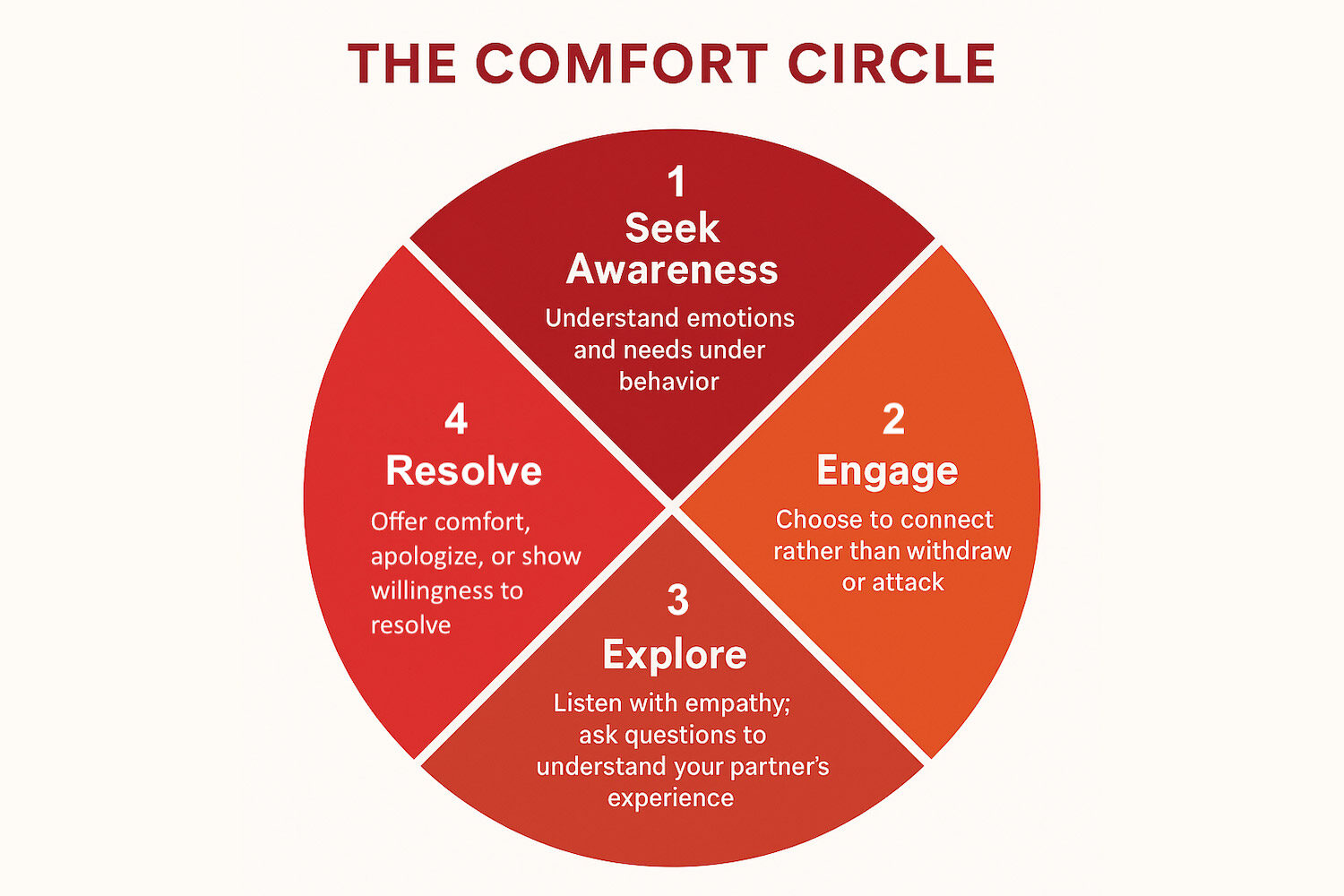
With this insight, they began setting aside intentional time to take turns sharing their childhood stories of emotional wounding and provide each other with a reparative experience of empathetic listening. This practice gave birth to what we now call the Comfort Circle.
Through these conversations, they uncovered the revelation that these unhealed childhood wounds had created emotional triggers in their marriage and were driving a predictable and repetitive cycle.
As they gave each other space to share and listened with intent to understand and comfort rather than defend, those triggers softened. They healed and grew closer. And they became more secure in their relationship and in how they loved.
Since then, hundreds of thousands of people have been introduced to the Comfort Circle—either through the book, radio, podcast interviews, live workshops, or in therapy.
While the benefit of having a safe, structured conversation makes sense to a lot of people, many don’t try the Comfort Circle on their own because they don’t think they’ll be able to do it with their spouse, or they try it once and get stuck, then give up.
As a therapist trained in our trademarked Attachment Core Pattern Therapy approach, I guide couples through the Comfort Circle over and over again until they can do it for themselves. And just like honing any other skill, learning to do the Comfort Circle well takes practice.
I’ve heard heartbreaking childhood stories that became the root of disconnection in a marriage after a person grew up broken. Yet, I’ve also witnessed the healing that comes when couples fully engage in this process.
So why is the Comfort Circle so hard for some?
Many people (including myself at times) struggle with the basic skills of how to speak and listen productively because they weren’t taught.
When you first begin using the Comfort Circle, the structure might feel like it’s stopping the conversation from being natural because it slows it down. But that’s actually part of its power.
Most of us speed up in conversations when emotions run high. Our goal becomes to get our point across, rather than truly hearing and understanding the other person.
We lead with anger and blame, which stops us from reflecting on the vulnerable emotions underneath. This pushes others away instead of drawing them close to want to understand our pain.
When we are expected to listen, we can sigh, shake our heads, roll our eyes, interrupt, or correct—sending the message that we don’t agree or care about the other person’s hurt. This shuts the speaker down.
Each of the insecure attachment styles commonly struggles in its own way:
- Vacillators want to prosecute a case and quickly shut down what they don’t like hearing.
- Avoiders dismiss feelings (both theirs and others’) and want to focus on what seems most logical.
- Pleasers withhold their feelings for fear of upsetting others to keep harmony, accepting blame or agreeing to resolutions they don’t want.
- Controllers give orders to be obeyed and don’t listen at all.
- Victims have no voice, so they can’t say “no” or “stop” to mistreatment.
But there is hope! These patterns may be heard to break, though with awareness and effort, growth is absolutely possible.
In my book Understanding Your Attachment Style, I dive deep into these and other insecure patterns each attachment style gets stuck in, as well as what each style needs to do to grow—even when others aren’t ready to change.
💡 Need Help Getting Around the Comfort Circle?
Feeling stuck? Get help with these Comfort Circle Resources and begin your journey to transforming your relationships today!
Learn more about the Comfort Circle and what it looks like in action with these Comfort Circle FREEBIES:
- 🎥 Watch Milan and Kay talk about repair by learning the Comfort Circle.
- 💗 Watch Kay guide a couple through the Comfort Circle step-by-step.
- 📘 Download practical tools — the Comfort Circle Guide for the Listener, the Soul Words (our emotions list), and Addressing and Solving a Problem — then try a Comfort Circle together today!
The more you understand about your attachment style and work your growth goals, the more capable you’ll be able to engage effectively in the Comfort Circle.
🙌 Thank You for Growing with Us
Thanks for being part of the How We Love community.
Keep learning, keep loving, and keep growing together.
With love and blessings,
Marc & Amy
Milan & Kay
Join over 100,000 people receiving our weekly relationship Insights directly to their Inbox.
Sign up using the form at the bottom of this page.